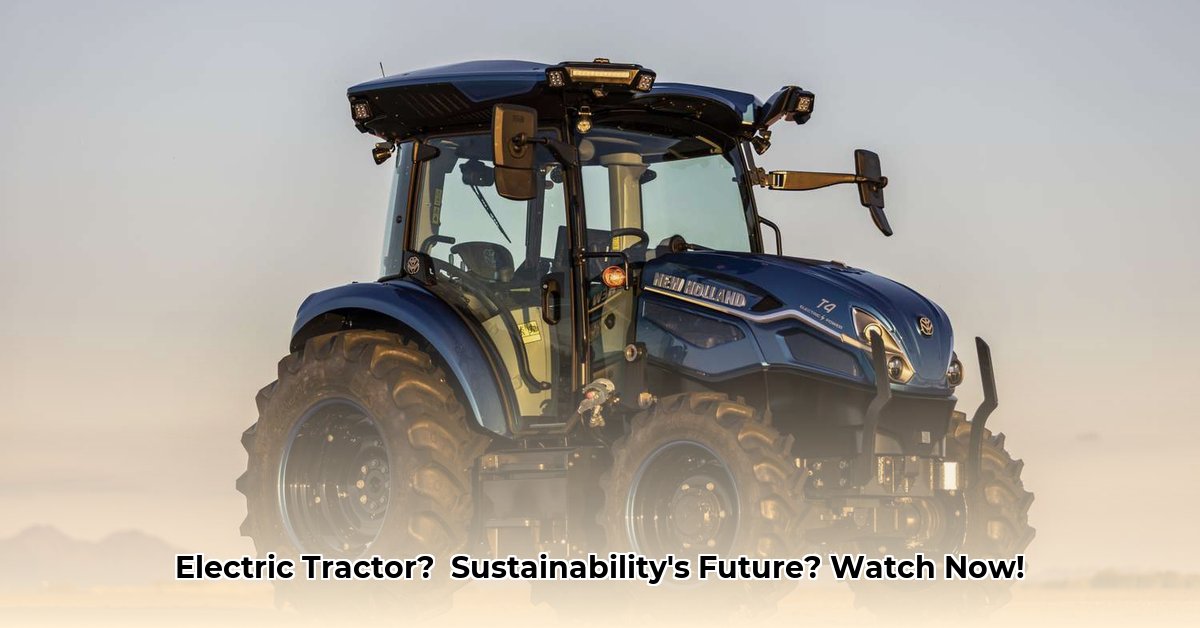
New Holland T4 Electric Power: A Comprehensive Review
The New Holland T4 Electric Power tractor represents a significant shift in agricultural technology, promising a greener and potentially more efficient farming future. But is this electric workhorse a game-changer, or just a costly novelty? This review delves into the tractor's performance, cost, sustainability, and technological features to offer a balanced assessment for farmers, investors, and policymakers alike. For more on New Holland tractors, see this helpful resource.
Power and Performance: Electrifying the Fields
This electric tractor boasts approximately 65 PTO horsepower (with some estimates slightly higher), sufficient power for various farm tasks. Its 110 kWh battery promises a full day's operation under typical conditions; however, intensive PTO use will naturally reduce operational time. Reaching speeds of up to 25 mph, it's adequately fast for most field work. A key factor affecting overall efficiency, however, remains the charging time—a crucial aspect explored further below. Does the power output justify the higher initial cost compared to diesel models? This is a key factor in evaluating its overall value.
Cost Analysis: The Green Premium
New Holland suggests potential operating cost savings of up to 56% compared to diesel counterparts, primarily due to the elimination of fuel and AdBlue (Diesel Exhaust Fluid) expenses and potentially reduced maintenance. However, the initial purchase price is significantly higher. This raises the critical question: Does the long-term cost savings outweigh the substantial initial investment? The answer is highly dependent on factors such as farm size, operational intensity, and the lifespan of the battery—a crucial unknown impacting the total cost of ownership (TCO).
Sustainability: Environmental Impact Assessment
At the point of operation, the TCO of the New Holland T4 Electric Power tractor is undeniably environmentally friendly. Zero tailpipe emissions result in significantly reduced noise and air pollution. This is particularly beneficial for farms near residential areas. However, a comprehensive lifecycle assessment considering battery manufacturing, raw material sourcing, and eventual disposal is crucial for a complete environmental picture. "The full environmental impact, from cradle to grave, needs further study," explains Dr. Emily Carter, Professor of Chemical and Biomolecular Engineering at Princeton University. Ongoing research is critical in fully understanding the long-term effect on the environment. Is the immediate reduction in operational emissions sufficient to compensate for the environmental costs associated with battery production?
Technological Advancements: Smart Farming Capabilities
The New Holland T4 Electric Power tractor integrates cutting-edge technologies. Its "Smart Roof" system enables autonomous operation, potentially addressing farm labor shortages. This autonomous capability could significantly impact labor costs and farm management practices. However, the level of integration with existing farm management software and the long-term reliability of the autonomous functions require further scrutiny. The integration of such technologies is a rapidly evolving area; we can expect significant improvements in future iterations.
Addressing the Challenges: Hurdles to Widespread Adoption
Several obstacles hinder the wide-scale adoption of electric tractors. Charging infrastructure remains a significant challenge, particularly in rural areas. "The lack of readily available charging stations in many farming regions is a major constraint," notes John Deere's Chief Sustainability Officer, Ms. Susan Cates. Government incentives may be vital to encourage the development of adequate rural charging infrastructure. Addressing issues concerning battery health, potential failures, and establishing robust safety protocols, especially for autonomous features, is also crucial.
Electric vs. Diesel: A Comparative Overview
| Feature | Diesel Tractor | New Holland Electric Tractor |
|---|---|---|
| Operating Cost | High (fuel, AdBlue, maintenance, repairs) | Potentially much lower |
| Upfront Purchase | Lower | Much Higher |
| Emissions | High (Greenhouse gases and pollutants) | Zero at point of operation |
| Noise Level | High | Significantly lower |
| Autonomy | Limited, typically requires a driver | Advanced autonomous capabilities (Smart Roof) |
| Maintenance | More frequent, higher cost | Potentially less frequent, lower cost (long term) |
Total Cost of Ownership (TCO): A Practical Calculation
Understanding the TCO is paramount for responsible investment in agricultural machinery. Accurate calculations require assessing not only the purchase price but also encompassing depreciation, interest, taxes, insurance, housing, operating costs (including electricity), and maintenance. This necessitates a comprehensive cost analysis across the tractor's projected lifespan. The potential for long-term savings with the New Holland T4 needs to be carefully weighed against its elevated initial cost.
Key Takeaways:
- The New Holland T4's long-term economic viability depends heavily on the accuracy of projected cost savings.
- A comprehensive TCO analysis, incorporating all relevant factors, is crucial for informed decision-making.
- The environmental benefits must be carefully weighed against the economic costs.
The New Holland T4 Electric Power tractor represents a significant step towards sustainable agriculture. However, its success hinges on overcoming technological challenges, fostering robust supporting infrastructure, and ensuring its economic viability for a broad range of farming operations. Whether it marks a revolution or a transitional phase remains to be seen, but its impact on the future of farming is undeniable.